Reflections on Piano Posture: Letting Sound Lead the Way
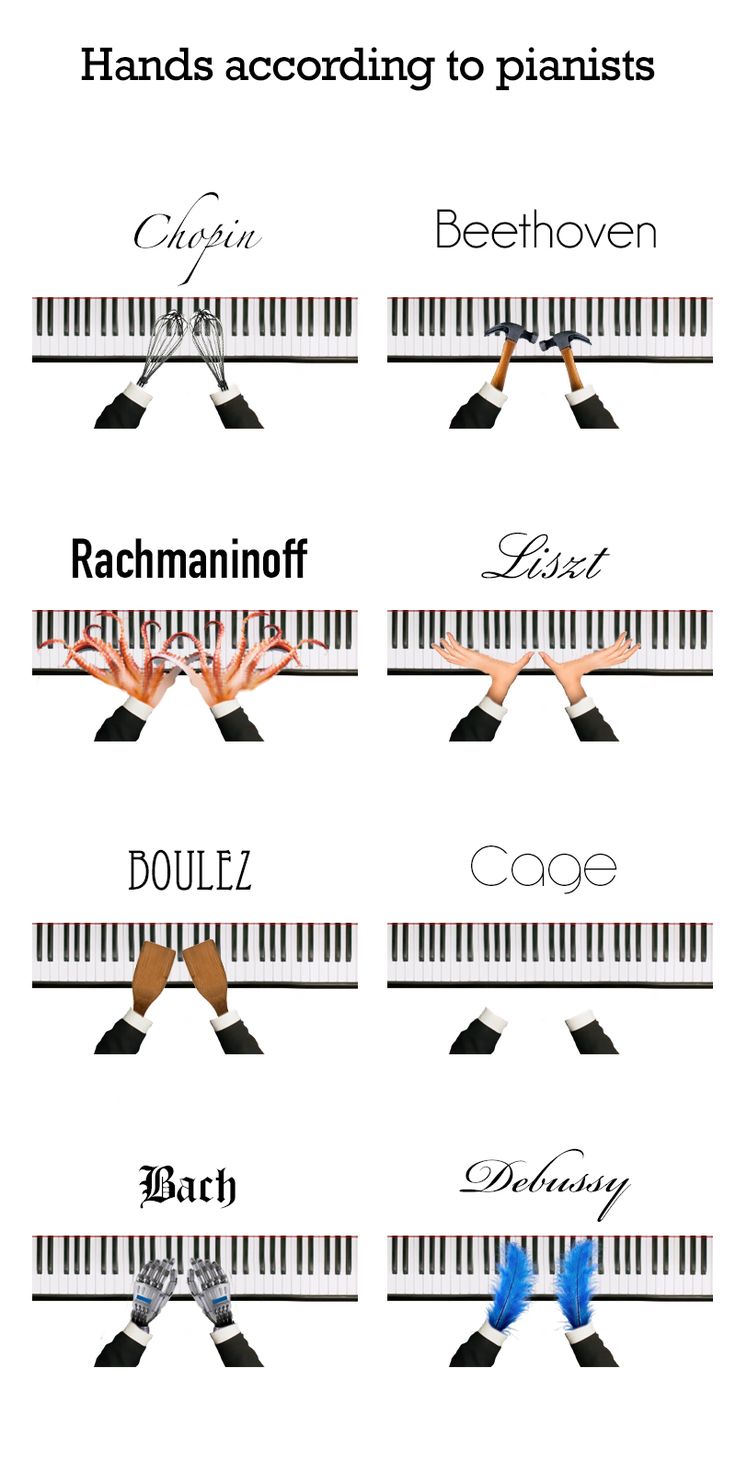
Posture is often treated as the very first step in piano learning. From an early age, we are taught to shape our hands properly and train our fingers in a certain way. Yet when we observe great pianists from different schools and traditions, their postures can appear surprisingly different. This naturally raises a question: were we taught the “wrong” way from the beginning? And perhaps more importantly, what does a “correct” piano posture actually mean?
Instead of judging posture as right or wrong, it may be more helpful to consider why certain postures exist in the first place. Many piano methods begin with the familiar “C-shaped” hand. Although this is not meant to be a universal rule, it is a practical starting point. The position allows beginners produce sound more easily by using a relatively natural hand position, helping to develop finger support and independence. Problems arise when this hand shape is treated as the only standard. Music is far too varied for a single posture to work in every situation. When we assume that “playing the piano” means adopting a prescribed position, we may risk overlooking a much more important question: does this posture actually help us play?
A healthy playing posture should begin with physical ease. When the body is relaxed, the joints can support and transfer weight efficiently, allowing for a variety of touches and tone colors. Piano playing naturally involves moments of tension and release, the key is not avoiding effort but to know when and how to let go. With timely relaxation, we can play with both stability and freedom over a long period of time.
No two hands are the same. Differences in palm size, finger length and finger width all affect how force is applied at the keyboard. Rather than chasing an abstract idea of “correctness,” it makes far more sense to discover the most efficient way your body can produce sound and transfer it directly into the keys. Posture should also respond to musical style and character. The buoyant sound world of Mozart requires a very different touch from the lyrical lines of Chopin. Approaching all music with the same physical setup inevitably flattens these stylistic distinctions.
Pianist Maria João Pires once said in an interview: “Technique doesn’t exist. It’s how to use your body in order to produce what you want to do. It’s an art of using the body. If it’s a technique, it’s not good anymore.” Her words remind us that technique is not a fixed collection of movements, but the core of piano playing lies sound. Our body is simply the medium through which our inner musical ideas become audible. What truly deserves our attention is learning to listen deeply, to understand ourselves physically, and to use our body intelligently so that musical intentions can genuinely come to life.
This idea extends well beyond music. In the film Enter the Dragon, Bruce Lee is asked, “What is the highest technique you hope to achieve?” His answer is simple: “To have no technique.” His philosophy rejects rigid forms in favor of awareness and self-understanding. Using no way as way, having no limitation as limitation. In many disciplines, form is only a tool rather than an end in itself. True freedom emerges when mind and body work as one. Bruce Lee’s synthesis of different martial arts into a coherent philosophy mirrors, in many ways, the deeper principles behind piano playing.
In teaching, this perspective has profoundly shaped my approach. During my university studies in pedagogy, I was introduced to Timothy Gallwey’s The Inner Game of Tennis. An idea from the book has stayed with me: “Letting it happen is not making it happen.” Gallwey explains that movement does not improve through excessive control or forceful effort, but through trust in the body’s natural coordination. When tennis players try to consciously control every detail of a serve, such as height, angle, strength and target, this often results in stiffness and inconsistency. When attention shifts toward observation, sensation and imagery, body begins to coordinate itself more effectively.
Piano playing works in much the same way. Instead of overwhelming students with instructions and mechanical control, I encourage them to first imagine a clear sound. Once the sound is alive in our mind, our body begin to realize it almost instinctively. This not only makes learning more efficient, but also nurtures independent thinking and interpretation. Rather than clinging to a fixed set of movements, students are guided through questioning, listening and observation to discover their own balance. Technique stops being something imposed from the outside and becomes a natural outcome of musical intent, where mind and body finally meet.
______________________
Interview with Maria João Pires:https://www.youtube.com/watch?v=OEA64RU8xF0
Bruce Lee’s “Enter the Dragon”:https://www.youtube.com/watch?v=hhvBTy28VJMW.
Timothy Gallwey:《The Inner Game of Tennis》